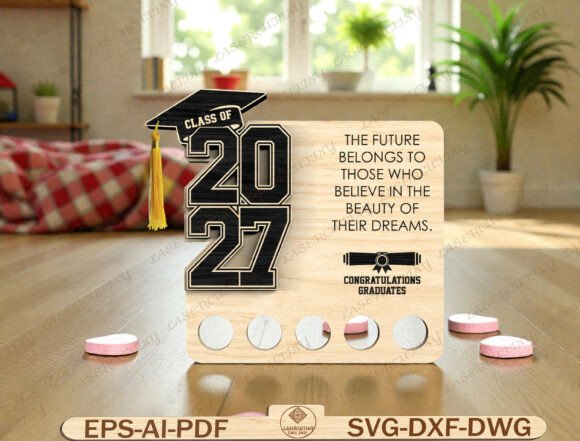
Graduation Cash Display Laser Cut File
When I sit down to review a new digital asset for my embroidery collection, I am rarely looking for just another pretty picture. I am looking for viability. I need to know if a design will hold up under the tension of a sewing machine, if it translates well into a physical object that customers are willing to pay for, and if it fits seamlessly into a cohesive brand aesthetic. This is where Graduation Cash Display Laser Cut File enters the conversation. It is not merely a graphic; it is a strategic tool for anyone in the handmade economy, from the solo Etsy seller to the boutique owner scaling their operations.
The first thing that strikes me about this machine embroidery design is its inherent structure. The concept of a "cash display" implies geometry, layering, and a specific kind of celebratory boldness. In the world of Graphic Templates, few things are as visually arresting as the intersection of typography and functional layout. This design leverages that intersection perfectly. It suggests a layout that is clean, modern, and highly legible—traits that are essential when you are stitching at high speeds or when a customer is viewing your printable mockup on a mobile screen. The visual personality here is confident. It does not whisper; it announces a milestone. For a small business owner, that confidence translates directly into perceived value.
Real-World Application: From Screen to Stitch
Let’s move past the theoretical and look at how this embroidery file performs in a tangible scenario. Imagine you are preparing inventory for the Class of 2027 graduation season. You have an order for a custom embroidered tote bag for a proud parent, or perhaps a sweatshirt for the graduate themselves. The challenge with cash display designs is often the density of information versus the clarity of the stitch work. If the lines are too thin or the spacing too tight, the result can look muddy after washing.
However, Graduation Cash Display Laser Cut File appears engineered to avoid these pitfalls. Its bold layers suggest a design that benefits from proper stabilizer support and consistent thread colors. When I envision this on a heavy canvas tote, the structure provides enough surface area for the needle to dance without pulling the fabric. On a cotton blend sweatshirt, the design offers a focal point that draws the eye immediately to the graduation year and the celebratory motif. It works exceptionally well as a personalized gift because it balances sentimentality with a trendy, graphic edge. It feels less like a generic clip-art addition and more like a bespoke design asset tailored for the modern maker.
I also see strong potential for this design in the realm of applique design techniques. Even if used primarily as a fill pattern, the laser-cut aesthetic lends itself to layered effects. A designer might use a contrasting thread color for the background layer and a bright, vibrant thread for the foreground text, creating depth through stitch density rather than complex digitizing tricks. This versatility makes it a valuable addition to any library of design assets.
Strategic Use Cases for Craft Businesses
For the Etsy seller or craft business owner, the application of this design extends beyond simple apparel. Consider the growing market for nursery decor and baby gifts. While graduation is a later-life milestone, the aesthetic of bold, graphic lettering is timeless. This design could be adapted for a "Class of 2050" onesie or a baby blanket, tapping into the long-term planning mindset of new parents. Alternatively, it fits perfectly into the holiday embroidery niche if recontextualized for end-of-year celebrations or academic achievements throughout the school year.
In the context of commercial embroidery, such as branding for a local bakery or a university club, this design offers professionalism. It avoids the cluttered look of older, overly ornate fonts. Instead, it presents a clean slate that says, "We care about quality." When you sell a finished product, you are selling trust. A crisp, well-executed stitch job on a tote bag design or a sweatshirt embroidery project builds that trust instantly. Customers can spot a rushed job from a mile away; they can also spot a thoughtful, well-planned design like this one.
Technical Considerations and Potential Pitfalls
No design is perfect for every situation, and as an experienced reviewer, I must highlight where caution is required. The very features that make Graduation Cash Display Laser Cut File striking—its bold lines and potentially dense areas—can become liabilities if not handled correctly.
- Hoop Size Constraints: Always verify the hoop size limits before committing to a large format. If the design exceeds your machine’s standard hoop, you will need to implement multi-hooping techniques, which increases production time and the risk of alignment errors.
- Fabric Texture and Stability: This design demands a stable base. Attempting to stitch this on a highly textured fabric, such as a chunky knit or a loose-weave linen, may result in skipped stitches or distortion. Thin fabrics require additional stabilizer backing to prevent puckering, especially around the denser fill areas.
- Small Details and Lettering: If the design includes tiny lettering or intricate decorative accents, test these elements rigorously. Small details can get lost in the stitch density or become difficult to thread manually. I recommend inspecting the design in black and white mockups to ensure contrast remains high even when simplified.
- Curved Surfaces: While this design looks great on flat surfaces like aprons or pillow covers, applying it to curved surfaces like caps requires careful stretching and possibly a different digitizing approach to maintain the integrity of the "laser cut" look.
Practical Designer Notes for Success
To get the most out of this digital embroidery file, I advise a rigorous testing protocol. Never run a new design directly onto your final product. Start by stitching it out on scrap fabric that matches the weight and stretch of your intended material. Check the thread colors against the fabric to ensure they pop. If you are using a dark fabric, consider whether a white or light-colored underlay is necessary to prevent the base fabric from showing through the stitches.
Furthermore, always confirm the licensing terms before listing this as a small shop product for sale. While the design itself is a powerful tool, the legal framework surrounding its commercial use varies. Ensure you have the right to sell finished items created with this embroidery project. Additionally, compare light and dark fabric backgrounds during your testing phase. A design that looks balanced on white cotton might appear overwhelming on navy blue, requiring adjustments to thread selection or stitch type.
Ultimately, Graduation Cash Display Laser Cut File represents a smart investment for the creative entrepreneur. It bridges the gap between graphic design precision and textile artistry. By respecting its technical requirements and applying it strategically across custom apparel, embroidered patches, and handmade products, you can create a line of goods that stands out in a crowded marketplace. It is not just about stitching letters; it is about crafting a memorable experience for the recipient, whether they are holding a diploma or opening a gift box. For those willing to put in the prep work, the payoff in customer satisfaction and brand reputation is significant.